Pages

Sunday, May 8, 2011

A Busy Month

My schedule has been very full lately, and it looks like I’ll miss this posting target by a week. My apologies. This will be an odds-and-ends post about some events that took place, and topics that came up, in April:
* Presentations
* A demonstration of the power of reducing cost of production in a pasture-based dairy
* Grain-feeding is not the cause, nor grass-feeding the cure, for E. coli O157:H7
* A Nutrition and Metabolism Society get together in the Pacific Northwest
* A hammered dulcimer gathering
All in one post!
**********************
On April 9th I spoke to the Douglas County Livestock Association's Spring Livestock Conference. The audience was an engaged one, and I enjoyed some wonderful interaction with several attendees. One of them was Craig Reed, a reporter for the Capital Press. He wrote an article about my presentation, which was posted on the 21st. If I could make a change, it would be in the title, “Expert sees protein as balm for obesity woes.” I’d replace “protein” with “meat” or “fat.” Despite that, I think it’s a pretty good article in a widely distributed agricultural publication. It was also a great exercise in “sharpening-up” the message.
***********************
The Power of Reducing Cost of Production
American agriculture has been thoroughly infected with the “more-and-bigger’s-better” virus that seems endemic to the rest of American culture. The focus of American agriculture has been on increasing production per head or per acre, rather than on the cost of that increase production. There’s an old joke about a rancher lamenting the fact that he was losing one dollar for every calf he sold. His solution was “I’d better sell more calves!” Humor only works when there’s truth in it, today’s high prices for cattle and sheep notwithstanding.

There are three economic levers a farmer or rancher can manipulate to influence the profitability of their farm or ranch: the amount of products they produce, the price they get for their products, and what it costs to produce those products. The cost of production may be the most powerful of these levers.
Swallow house - organic fly control
On April 12th I took part in a field trip as part of the Oregon State University Forage Production Class. We visited Jon and Julianne Bansen’s Double J Jerseys farm in Monmouth, Oregon. They are part of the Organic Valley Cooperative. It was a beautiful day, a one-day break in our otherwise cool, rainy “spring. ” The sparrows (the Bansen’s organic fly control) had finally returned the week before, a couple of weeks later than normal. The cows had only recently begun their grazing season. Jon believes that he’s proven what he was told by some New Zealand dairymen – it takes 20 years to become a good grazier. About twenty years ago, their average milk production per cow was pushing 19,000 pounds of milk. The cows were grazing pasture, but they were also receiving approximately 20 pounds of grain per head per day.
April grazing in the Willamette Valley
Jon has learned a great deal since then. His rotation management has improved and he’s made significant investments in his pasture “facilities.” He’s learned a great deal about conserving excess pasture as baleage – grass & clover silage in plastic-wrapped large round bales. Today he feeds approximately 2 pounds of grain per cow per day. His average milk production today is 12,000 pounds of milk per cow. Reduced production?!? Why, that’s un-American!! But here’s the power of the cost of production lever - His feed cost went from 50% of his milk check to 6%! He figures he’s doubled his profit! His cows have a productive life that’s 2.5 times the national average. And Jon feels he and his family (and his cows, too!) have a better quality of life.
Concrete pathways, sound fences,
water in each paddock,
pasture renovation. Essential expenses!
It is important to remember, however, that low cost of production does NOT equal low cost. Proper fences, water for his cows in every paddock, concrete walkways, and pasture renovation all cost. Cutting back on these expenses will NOT produce the results he has achieved.
*****************
On April 16th I gave my “Turning the Food Pyramid Upside Down” presentation at the Small Farm Trade Fair in Madras, Oregon. This event, its 35th year as I understand, was produced by the Small Farmer’s Journal. This journal (“A tool for self sufficiency Starting your farm and keeping it going All in unison with nature”) focuses on animal-powered agriculture. The weather wasn’t helpful, but it was still a wonderful weekend. I met a number of interesting folks and learned about a wonderful program, Tera Nova Community Farm, that incorporates organic vegetable production into the education program at a Big Picture school in Beaverton, Oregon. I was reminded that the “small farm” community is a tremendously broad one, with many different philosophies and guiding principles.

Central Oregon pasture in April
*****************
More New Conventional Wisdom

Early in April, a fellow member of the Nutrition and Metabolism Society told me about an upcoming webinar. Thanks to him, on April 19th I “attended” the Washington State University webinar “Pre-harvest E. coli O157:H7 in cattle” by Dr David Smith from the University of Nebraska.

Escherichia coli O157:H7 is an important food born pathogen. And, I’m afraid, it’s another example of the new conventional wisdom. I have frequently heard or read someone from the organic, grassfed, and/or low-carb/primal/paleo communities say that grain-feeding produces or promotes E. coli O157:H7 while grass feeding eliminates or reduces it. The science, I’m afraid does not support this claim. In fact, studies show that there is no difference in the prevalence of E. coli O157:H7 in live animals fed a variety of diets (Fegan, et al., 2004, Van Baale, et al., 2011)

A very small USDA study of a handful of cattle in 1998 did suggest that feeding cattle hay could reduce E. coli O157:H7 (Diego-Gonzales, et al., 1998), but that small study’s findings were never duplicated in larger research. More than a decade later, a large, accumulated body of research strongly suggests that E. coli O157:H7 appears to be a natural bacterium found in the gut of cattle regardless of production system.

“Organic” and “natural” methods don’t seem to impact bacteria in the gut either. In 2009, researchers examined the incidence of pathogenic E. coli O157:H7 in organic and naturally raised cattle and concluded, “Our study found similar prevalences of E. coli O157:H7 in the feces of organically and naturally raised beef cattle, and our prevalence estimates for cattle in these types of production systems are similar to those reported previously for conventionally raised feedlot cattle.” (Reinstein, et al., 2009)

Proper butchering, handling, and preparation practices are the best defense against E. coli O157:H7 and other food-borne illnesses. The good news is that, despite (or perhaps because of) increased vigilance and improved diagnostic technologies, the incidence of E. coli O157:H7 contamination and disease have declined dramatically.

Data from the U.S. Department of Agriculture Food Safety and Inspection Service (USDA FSIS) show that the presence of E. coli O157:H7 in raw ground beef products declined by 63 percent between 2000 and 2009 to approximately one third of one percent of ground beef samples tested. That means that the pathogen will only be found in approximately 1 in 300 samples (USDA).

In 2010 the Centers for Disease Control and Prevention (CDC) announced that food-borne illnesses are declining. In particular, the CDC said that the U.S. had achieved its Healthy People 2010 public health goal of less than one E. coli O157:H7 illness per 100,000 people (CDC, 2010). This decline has occurred as public health tracking has expanded significantly. In 1993 few states tracked E. coli O157:H7 infections in people. Today, every state in the U.S. routinely monitors the incidence of these infections and reports to federal officials. The observation of a decline, under these conditions of increased scrutiny, is encouraging.

While an E. coli infection is a serious illness, especially for the young, elderly, or those with a compromised immune system, it causes less than a tenth of the total deaths due to Salmonella or Listeria. Less than 3% of all deaths due to food-borne pathogens in the US each year are due to E. coli O157:H7, while Salmonella and Listeria are responsible for 31 and 28 percent, respectively (Mead, et al., 1999).

But one E. coli O157:H7 illness in 100,000 people per year sounds pretty high, doesn’t it? Well let’s compare it to your one-year risk of dying* as a result of: a car accident (approximately one out of 6500); murder or falling (one in 16,500); walking across the street (one in 48,500); drowning or fire (one in 88,000) (Bailey, 2006).

* less than 1% of E. coli O157:H7 cases are fatal (Mead, et al., 1999)

References:

Bailey, R. 2006. "Don't Be Terrorized: You're more likely to die of a car accident, drowning, fire, or murder." Reason.com. Accessed at http://reason.com/archives/2006/08/11/dont-be-terrorized, May 8, 2011.

CDC. 2010. CDC Press Release, "CDC Report Shows Success in Fighting E. coli O157:H7." April 23, 2010, Accessed at http://www.cdc.gov/media/pressrel/2010/r100415b.htm, May 8, 2011.

Diego-Gonzales, F., T. R. Callaway, M. G. Kizoulis, and J. B. Russell. 1998. "Grain Feeding and the Dissemination of Acid-Resistant Escherichia coli from Cattle." Science 11 September 1998: 281(5383)1666-1668.

Fegan, N., P. Vanderlinde, G. Higgs, and P. Desmarchelier. 2004. "The prevalence and concentration of Escherichia coli O157 in faeces of cattle from different production systems at slaughter." Journal of Applied Microbiology. 97, 362-370. Accessed at http://www3.interscience.wiley.com/journal/118807187/abstract?CRETRY=1&SRETRY=0 May 8, 2011.

Mead, P. S., L. S., V. Dietz, L. F. McCaig, J. S. Bresee, C. Shapiro, P. M. Griffin, and R. V. Tauxe. 1999. "Synopses: Food-Related Illness and Death in the United States." Vol. 5 No. 5. Centers for Disease Control and Prevention, Atlanta, Georgia. Accessed at http://www.cdc.gov/ncidod/eid/vol5no5/mead.htm, May 8, 2011.

Reinstein, S., J. T. Fox, X. Shi, M. J. Alam, D. G. Renter, and T. G. Nagaraja. 2009. "Prevalence of Escherichia coli O157:H7 in Organically and Naturally Raised Beef Cattle." Applied and Environmental Microbiology.75(16):5421-5423.

USDA Food Safety and Inspection Service. "Microbiological Testing Program for Escherichia coli O157:H7." Accessed at http://www.fsis.usda.gov/Science/ground_beef_e.Coli_Testing_results/index.asp, May 8, 2011.

Van Baale, M. J., J. M. Sargeant, D. P. Gnad, B. M. DeBey, K. F. Lechtenberg, and T. G. Nagaraja. 2004. "Effect of Forage or Grain Diets with or without Monensin on Ruminal Persistence and Fecal Escherichia coli O157:H7 in Cattle." Applied and Environmental Microbiology. 70(9):5336-5342. Accessed at http://aem.asm.org/cgi/content/abstract/70/9/5336, May 8, 2011.

******************
A cell biologist, an author, a psychiatrist and a forage agronomist meet for dinner …

No, that isn’t the opening line of a joke. It really happened!

Judy Barnes Baker, Dr. Ann Childers, yours truly, and Dr. Richard Feinman
On April 21st I met with Judy Barnes Baker, Dr. Ann Childers, and Dr. Feinman, founder of the Nutrition and Metabolism Society, for a get together and brainstorming session in Portland. We enjoyed a lovely dinner at Veritable Quandary.

Judy Barnes Baker, is the author of Carb Wars; Sugar is the New Fat. She has posted on our meeting at her blog Carb Wars.

Dr. Ann Childers, a fellow member of the Healthy Nation Coalition as well as the Nutrition and Metabolism Society, is a child and adult-trained psychiatric physician who focuses on nutrition in treating her patients. Anyone interested in mind-diet interactions should follow her blog.

I’d met Dr. Feinman in Seattle last year at the joint meeting of the American Society of Bariatric Physicians and Nutrition and Metabolism Society. His scientific background and his passion about confronting the conventional make him a fascinating dinner partner. He’s recently started blogging, and it’s well worth reading.

The mission statement of the Nutrition and Metabolism Society states:

"The Metabolism Society is dedicated to addressing the problems of obesity, diabetes & cardiovascular disease through public awareness and education. The Society believes specifically that the therapeutic potential of carbohydrate-restricted diets for the treatment of these diseases is under-investigated and under-utilized. The Society seeks to support research in this area....Our mission is to improve current nutritional guidelines and to see that sound scientific information is provided for the public."

You can be a part of this important work by joining the Metabolism Society for only $10.00 a year! More information about ways you can support truth in science is here: http://www.nmsociety.org/

******************

Because music is important to our health, too
Steve Schneider, Dee Dee Tibbits, Yours Truly, Lawrence Huntley,
Mick Doherty (my teacher), Rick Fogel (made my dulcimer)

April ended and May began with the Spring Fling Rendezvous Hammered Dulcimer Gathering in Sandy, Oregon. I’ve organized and produced this event for the past twelve years. For the last eight years it has been held at Oral Hull Park, which is run by the Oral Hull Foundation for the Blind (a truly worth cause if you’re looking for a cause to support). This year’s three featured instructors, Dee Dee Tibbits, Steve Schneider, and Kendra Ward (and her husband Bob Bence) joined the “local boys” (Mick Doherty, Rick Fogel, Lawrence Huntley, and Carl Thor). These instructors provided a wonderful weekend for 42 hammered dulcimer players from eight different states. I’ve posted several pictures, if you’re interested: vol 1 and vol 2.

*****************
Now to get back on track and post on the 15th! It will be on some more items of new conventional wisdom - hormone and antibiotic use in animal agriculture.
*****************

Friday, April 15, 2011

Ignorance and Addiction

I’ve written before about how the “low fat diet is the healthy diet” message has infected so many other disciplines. Those concerned with environmental issues and agricultural policy are not immune to this contagion. Here are two examples.

Mid-April grazing in the Willamette Valley

Environmental Issues

One piece of conventional “wisdom” is that animal agriculture is responsible, in part, for anthropogenic global climate change (formerly known as “global warming”). If that were true, then advocating a diet based upon animal products would harm the environment, while plant-based diets would save it. Hence “Meatless Mondays” and “Meat=Heat” campaigns. Some recent web-surfing took me to the Meat and Livestock Australia web site. Lots of interesting information, including their Red Meat Green Facts and Myth Busting pages. Two of the busted myths are worth mentioning:

Myth: It takes 13,209 gallons (50,000 liters) of water to produce 2.2 pounds (1 kilogram) of beef

Have you ever heard of “virtual water figures”? I hadn’t. Apparently virtual water figures attribute every drop of rain that falls on a farm to the production of red meat, ignoring that most of the water ends up in waterways, as ground water, or is used by trees and other plants not grazed by cattle. It is obviously inappropriate to use virtual water figures for environmental measurements. A more appropriate figure is from a life cycle assessment that calculates the amount of water used to produce a pound of beef from grazing on farm to exiting the processing facility. A 2009 life cycle assessment carried out by The University of New South Wales for three beef production systems in southern Australia found that it takes 7 to 143 gallons (27 to 540 liters) of water to produce 2.2 pounds (1 kilogram) of beef (See this link for more information.). That’s a figure almost 100 times less that the myth, at least!

Myth: Livestock produce more emissions than the various forms of transportation, combined.

This frequently quoted figure comes from Livestock's Long Shadow, a report published in 2006 by the United Nations Food and Agricultural Organization (FAO). A 2010 review of this report by scientists from the University of California Davis found that the FAO authors calculated greenhouse gas emissions in two different ways, resulting in an unfair comparison (link to abstract). One of the authors of the FAO report, Livestock Policy Officer Pierre Gerber, told BBC News he accepted the criticism. "I must say honestly that he [Professor Mitloehner] has a point; we factored in everything for meat emissions, and we didn't do the same thing with transport". The estimate of anthropogenic greenhouse gases emitted from the world's livestock stated in Livestock’s Long Shadow is 6 times greater than that from the Environmental Protection Agency (18% vs. less than 3%).

I think the evidence shows that animal agriculture is the only truly sustainable form of agriculture we’ll ever hope to have, and that anything else will be a compromise. I was pleased, therefore to find the Meat and Livestock Australia site (thanks to Neil Lane). But as I read down through the list of myths, it happened again!

In response to the myth that “Replacing red meat would be beneficial for people's health” they state that “Red meat delivers nutrients essential for health and wellbeing including: protein, iron, zinc, B vitamins and long chain omega-3s.” Good points, I agree. They then provide a link to “Find out more about red meat and nutrition.” On that page we find the statement “With less than 4% saturated fat, trimmed red meat has the Heart Foundation’s Tick of Approval.”

Sigh …

Agricultural Policy

A colleague from the Healthy Nation Coalition recently asked me about George Pyle’s book Raising Less Corn, More Hell: The Case for the Independent Farm and Against Industrial Food. I am sympathetic to the case that Pyle is trying to make. Our agricultural system is broken, too. I believe that our policy incorrectly favors the largest producers, and subsidizes the production of commodities that are NOT required for human health. But mid-way through his book, Pyle goes wrong. The fact that he was so close to the truth when he did so made it all the more disconcerting.

On page 88 Pyle offers an explanation for why “Poor women of all races and ethnic groups are 50 percent more likely to be obese than are their richer sisters.” He suggests it’s due to the fact that “poor people have diets heavy in starches and sugars, processed foods that are thought to be cheaper and more filling.” I have no problem agreeing with that. Later, on page 89, Pyle writes “the London-based International Obesity Task Force estimates that some parts of Africa have more overnourished children than undernourished ones. (Over-nourished, that is, in the sense of too many sugars and starches.)” And then, on page 90, Pyle writes “By 2004 the U.N. Food and Agriculture Organization found another link between hunger and obesity in developing countries, a link also caused by the increasing availability of American-style cheap, fatty foods.“

Wait a minute! Where did the “fatty” come from? He hadn’t made that point in his preceding discussion! He was so close to making a significant breakthrough. But having gone off the rails, he proceeds to destroy the right-of-way. “The hungry people of rural Africa, Asia, and, most maddeningly, of the rural communities that consistently top the list of America’s poorest counties are like the amputated toes of the diabetic or the diseased heart of the cholesterol-loaded person. They are unseen parts damaged by the unthinking efforts of the rest of the body to ensure it is always full.” On page 92, he states “Cheap corn not only translates to cheap beef, which means we eat more of it and get fat” and that beef will “shorten their lives by an indefinite number of years.”

I’ve found it hard to continue reading this book. If he’s this far off on this, how many other factual errors did he make throughout the rest of the book? Until we’ve completely uproot the faulty reasoning that got us into the chronic disease epidemic we now face, we will have difficulty fixing what’s so broken.

Addiction

And we must remember that we’re not just striving to correct factual error. We’re facing a population that is addicted to carbohydrates. Paul John Scott’s recent article, Are Carbs More Addictive Than Cocaine? might seem like hyperbole, but I don’t think so.

In “Dr. Bernstein’s Diabetes Solution” I read the story of a diabetic woman who, by following Dr. Bernstein’s program, had significantly lowered her blood sugars, dramatically improved total cholesterol/HDL ratio (meaning she’d lowered her cardiac risk), reversed the vision loss she had been experiencing, almost completely restored the feeling in her feet, along with some weight loss as a fringe benefit. A critical part of Dr. Bernstein’s program to achieve normal blood sugars is, of course, a restricted carbohydrate diet. After describing all of these improvements in her health, this patient says: “I miss the goodies I give my grandkids, all the cookies, candy bars, ice cream. And the holidays. Everything’s kind of restricted.” If that doesn’t sound like addiction to you, it sure does to me! I understand cravings and missing things I used to eat, believe me! But to have experienced such an improvement in your health, to have been taught so much by the extraordinarily intensive counseling and coaching approach that Dr. Bernstein employs, and to still think that these “food” items are fit food for human beings – let alone your diabetes-prone grandchildren – is frankly breathtaking. Imagine a clean and sober woman saying: “I sure miss the methamphetamine, especially when I give it to my grandkids.”

References

Bernstein, R. K. 2007. “Dr. Bernstein’s Diabetes Solution: The Complete Guide to Achieving Normal Blood Sugars. Little, Brown and Company, New York, NY.

Pyle, G. 2005. “Raising Less Corn, More Hell: The Case for the Independent Farm and Against Industrial Food.” Public Affairs, New York, NY.

Saturday, April 2, 2011

Some Mammals Require Dietary Carbohydrate

But they’re ruminants, and we aren’t


I’ve been busy since the last post. I’m grateful for the opportunities I’ve been given, but it is a challenge! I made a commitment (dare I say a “resolution”?) to post items to this blog on the 1st and 15th of each month. Looks like I’ll miss this one by just a bit. I’ll try to get back on track for the next post, although the next few weeks will include presentations at the Douglas County Livestock Association’s Spring Livestock Conference on April 9th in Roseburg, Oregon and at the Small Farm Trade Fair in Madras, Oregon on April 16th.

Since my last post I’ve given a presentation, attended a conference, and tried to work my way through a couple of books. And I’m constantly being reminded of just how much we have to do to before “the system” is fixed.


I spoke to the Crook County Stock Growers Association’s Annual Banquet on March 19th. The event was held at the at the Crook County Fairgrounds in Prineville, Oregon. The well attended event was, in part, a fund-raiser for their Beef For Kids initiative. They are striving to get good-quality, locally-grown beef back on the menus of Crook County public schools. A truly worthy goal. I know that the cattlemen in Malheur County are already engaged in a similar initiative, and I hope we’ll see this effort spread throughout the nation. The “food” we provide to our school children via our school meal programs is truly abysmal. And the chance to repeat the message, in various ways, that animal products are fundamental to human health should never be missed. My presentation, “Food For Thought,” was well received. Several folks kindly shared their personal experiences with me. I was grateful that I could again direct people to the sources of information that have so profoundly changed my own life. Eventually I found myself standing in the dinner line next to a long-time friend. Suddenly I became aware of one of the paintings that were hung on the wall over the pass-through from the kitchen. Oh, the irony!
Figure 1:How to fatten a hog, and a human!
I also attended the Oregon Forage and Grassland Council’s 2011 Annual Meeting in Albany on March 24th. This year’s keynote speaker was Neil Lane, an Australian dairy farm management consultant from Intelact. He shared a wealth of information about pasture-based dairy management in Australia and New Zealand. What he tried to impart to us can have an immense impact on the Pacific Northwest. Our environment is unique to North American. The potential for grass-based animal agriculture in our region is huge. We have progressive grass farmers here, but there’s room for many more!

“We don’t manage paddocks – we manage tillers!”
                                                                                  - Neil Lane

Now a clump of perennial ryegrass might look like a single plant, but it’s actually a collection of tillers. While each tiller has its own leaves and roots, it is connected to neighboring tillers at its base. These tillers share water, nutrients and carbohydrates via this connection. A newly-established ryegrass plant consists of one tiller until it reaches the 3 leaf stage. If there is a low tiller density, sunlight will penetrate to the base of the sward. This stimulates the production of daughter tillers. These daughter tillers grow from buds in the leaf axil, appearing first as small one leaf tillers growing inside an older leaf at the base of the plant. This older leaf soon dies and disappears. The new tiller continues to put out leaves and soon becomes a separate tiller with its own root system. Each new leaf emerges on the opposite side of the tiller to the previous leaf.
Figure 2. A ryegrass tiller with 3 1/2 leaves (from Guest, 2008)
A perennial ryegrass tiller maintains a maximum of 3 live leaves. As each new leaf emerges after this 3 leaf stage, the oldest leaf dies. Maximum perennial ryegrass yield is achieved by allowing the tillers to grow to 3 leaves as each subsequent leaf is bigger than the previous leaf. The 1st leaf contributes 15–20% of total pasture biomass, the 2nd leaf 30–35% and the 3rd leaf 45–50% with little difference in metabolizable energy content between the 1st and 3rd leaf (Figure 3).
Figure 3. Leaf stage vs. yield (from Guest, 2008)
Provided water is not limiting, leaf growth rate is controlled mainly by temperature. Perennial ryegrass will usually grow a new leaf every 6–7 days in the warm, sunny days of early fall, but could take 10–13 days or more in the colder, shorter days of mid to late fall.

Tillers form glucose and then other water soluble carbohydrates (WSC) in the leaves via photosynthesis. These WSC (also known as Non-Fiber Carbohydrates, or NFC) are used to provide energy for ongoing growth and respiration. The availability of WSC in ryegrass tillers has a marked effect on the plant’s re-growth potential and ability to persist after grazing. When the fourth leaf emerges and the oldest leaf dies, there is no further build up of plant WSC levels (Figure 4). Proper grazing management must take into consideration this relationship to promote improved utilization and production. Improved pasture utilization and production will lead to optimal profit.

Figure 4. Leaf stage and water soluble carbohydrate levels (from Guest, 2008)

Studies have shown that it is best to use leaf appearance intervals
to decide when to graze, not pasture height.
- Kelly Guest, 2008

Grazing at the 3rd leaf stage doesn’t just improve pasture production and utilization. It also improves animal performance. Proper rumen function requires at least as much NFC as Ruminally Degradable Protein (RDP) in the herbage eaten. If there is too much RDP, it is converted to ammonia in the rumen. This excess ammonia needs to be detoxified to urea and excreted in urine. This process requires energy, and can have a negative effect on both production and reproduction in the grazing animal. Green growing pasture contains more than enough RDP for any ruminant’s requirements, but the NFC are frequently limiting. Recent research has shown that the ratio of RDP to NFC becomes more balanced after the 2-leaf stage, as NFC levels increase with re-growth, while RDP levels decline due to leaf maturity. The ratio of RDP to NFC can be as high as 5:1 at the 1st leaf stage, declining to 1:2 at the 3rd leaf stage. The levels of minerals in perennial ryegrass change markedly with re-growth, too. Potassium, which is usually at levels far in excess of the animal’s requirements, declines, while calcium and magnesium, important for milk production, increase with re-growth to the 4-leaf stage. One indicator of appropriate mineral status for performance of dairy cows is the ratio of potassium over calcium and magnesium. This ratio should be below about 2.2 to reduce the incidence of grass tetany and other metabolic problems. The ratio falls from about 6 at the 1st leaf stage, to below 2.2 at the 3rd leaf stage. Another indicator of appropriate mineral status is the ratio of calcium to phosphorus. The recommended ratio for milking cows is above about 1.6:1. In perennial ryegrass this ratio changes from about 1:1 at the 1st leaf stage, to over 2:1 at the 3rd leaf stage.

Table 1. Nutrient values of perennial ryegrass herbage at different leaf stages. (Donaghy, 2005)

There is abundant evidence of farmers increasing their profitability by using leaf stage for grazing management. But new ideas aren’t always embraced by the farming community. If the New Zealanders are lagging in their adoption of this philosophy, as Neil told us, then how long will it be before it’s adopted in the US? Seven-plus dollar a bushel corn may help the adoption rate!

Figure 5: Spring in Western Oregon
References:

Donaghy, D. and B. Fulkerson. 2005. ‘Principles for developing an effective grazing management system for ryegrass-based pastures’. Press release Dairy Research and Development Corporation, Tasmanian Institute of Agricultural Research. http://www.crtkyneton.com.au/seeds/heritageseeds/dairy-pasturemanagement.pdf

Guest, K., 2008. “Pasture Phase Farming – More Than a Passing Phase: A Handbook to Ryegrass Management on the Esperance Sandplain.” Lemon, J., J. Ryan, M. Ryan, N. Witham, and J. Lucey, Eds. South East Premium Wheat Growers Association. http://www.sepwa.org.au/pastures/book.html

Tuesday, March 15, 2011

Changing Mindsets

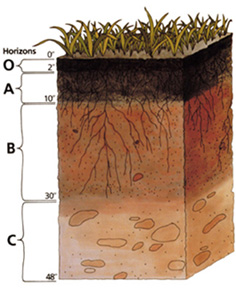
What’s the difference between dirt and soil? Well, dirt is the stuff we wash out of our clothes. Soil is the loose surface layer of the earth’s crust in which plant roots develop. Quoting Ralph Inge, “All of nature is a conjugation of the verb ‘to eat.’” And, ultimately, the soil eats us all. We must learn to value our soil. All life is tied to the thin layer of topsoil covering the land. Soil chemistry determines whether civilization can be supported or not. Some civilizations apparently became extinct because they did not understand the importance of their soils. Lierre Keith, in her book “The Vegetarian Myth,” refers to topsoil as “fossil soil” to emphasize the fact that this precious resource takes millennia to form. According to the U. S. Department of Agriculture’s Natural Resources Conservation Service, it takes 500 years to form an inch of topsoil. And like fossil fuel, we’re using it up at an unsustainable rate. According to the USDA, one-third of U.S. agricultural land is eroding faster than the sustainable rate. The “sustainable rate” is the acceptable rate of soil loss. There are no figures for the proportion on U.S. agricultural land where top soil is increasing. Perennial pastures improve soil structure and fertility and decrease erosion losses. Pastures build topsoil!

Take an apple and imagine that it represents the earth. Now cut it into quarters and discard three of them, since three quarters of the earth’s surface is covered by water. Now cut the remaining quarter in half. One of these sections represents desert, swamps, mountains, and the Arctic and Antarctic regions, so discard it. Slice the remaining section lengthwise into four equal parts. Now you have four 1/32nd sections of the apple. Discard three of them, as they represent areas of the world which have rocky soil too poor for any type of food production, are too wet for food production, or are urban areas. Carefully peel the remaining section. This small bit of peel represents all the soil which humans depend on for food production (Wyoming Agriculture in the Classroom, 2008).

But wait a minute! What about the grasslands which occupy 40% of the earth’s land surface (World Resources Institute)? “Crop production” and “food production” are NOT synonymous. This is the flawed mindset that agriculture means crop production and that farming means cropping. This mindset assumes that pasture-based livestock systems are less productive than cropping systems, and that pasture-based systems are less productive than confinement systems. These assumptions usually compare single-species pasture-based livestock systems on less productive soils with crop production on highly productive soils. Rarely are integrated, multiple species grazing systems considered, nor are these two philosophies compared on soils of equal productivity. The irony here is that this country’s most productive soils developed under the Midwest’s tall grass prairie. And the prairie was well managed by the Native Americans. But wait! Didn’t the Native Americans “live lightly on the land?” Once again, we’re confronted with a badly flawed worldview.

“When Lewis and Clark headed west … they were exploring not a wilderness but a vast pasture managed by and for Native Americans” (Lott, 2002).

Images of woodlands, unsullied by human presence, and of the Great Plains (or Prairie, in Canada) with its huge herds of bison (Bison bison) may come to mind when we think about pre-European North America. But this popular image of pre-Columbian North America as a pristine paradise is incorrect. When Europeans first arrived in North America, they found anything but a primeval landscape. Instead, they encountered a land significantly altered by humans through the use of fire, sophisticated agricultural techniques, mining, and road and mound building (Mann, 2006).

“At the time of Columbus the Western Hemisphere had been thoroughly painted with the human brush. Agriculture occurred in as much as two-thirds of what is now the continental United States, with large swathes of the Southwest terraced and irrigated. Among the maize fields in the Midwest and Southeast, mounds by the thousand stippled the land. The forests of the eastern seaboard had been peeled back from the coasts, which were now lined with farms. Salmon nets stretched across almost every ocean-bound stream in the Northwest. And almost everywhere there was Indian fire.” (Mann, 2006)

From fire created and maintained prairies and managed forests, to earthworks and settlements, the American landscape by the time of European contact had already endured thousands of years of modification by large Native American populations. The pristine wilderness view, to a large extent, is the invention of 19th-century romantic and primitivist writers like Henry David Thoreau and Henry Wadsworth Longfellow (Denevan, 1992). The reality is that the impact of native peoples was nearly ubiquitous, even in areas with comparatively sparse Indian populations. Many scholars now believe there were more than 90 million inhabitants of the New World when Christopher Columbus first set sail for the Indies (Denevan, 1996).

The climate responsible for the eastward extension of the tall grass prairies disappeared thousands of years ago, but manmade fires preserved it in areas such as southern Wisconsin, Illinois, Indiana, and parts of Ohio by halting the process of ecological succession which would have resulted in these areas becoming dominated by trees as the natural climax vegetation (Williams, 1989). Further east, forest management with fire produced an environment that benefited wildlife and humans. The effectiveness of these practices is demonstrated by the observations that bison (Bison bison) once roamed along the east coast from New York to Georgia (Mann, 2006) and that elk (Cervus canadensis) have been observed in every continental state except Florida (Manning, 1997). “When Lewis and Clark headed west … they were exploring not a wilderness but a vast pasture managed by and for Native Americans” (Lott, 2002).

Bison grazing in the Tallgrass Prairie Nature Preserve, Osage County, Oklahoma
The popular misconception of pre-European North America as a “wilderness” reflects a lack of understanding of pre-Columbian North American conditions and practices, and a modern environmentalist ethic (Mann, 2006). “The post-Columbian abundance of bison,” was largely due to “Eurasian diseases that decreased [Indian] hunting,” according to Valerius Geist, a bison researcher at the University of Calgary (Geist, 1998). The huge herds of bison that were described by early European settlers were a symptom of the destruction of the human-animal-environment system that the Native Americans had operated for centuries before European contact, rather than an example of the “natural”, undisturbed grassland-wildlife system. Thus, the massive, thundering herds were pathological, something that the land had not seen before and was unlikely to see again (Geist, 1998, Mann, 2006). The prehistoric human imprint on the North American landscape was masked by the decimation of Native American populations as a result of exposure to Old World diseases, for which they had no immunities.

Charles C. Mann, in his book 1491: New Revelations of the Americas before Columbus, writes:

“When the newcomers [European settlers] moved west, they were preceded by a wave of disease and then a wave of ecological disturbance. The former crested with fearsome rapidity; the latter sometimes took more than a century to tamp down, and it was followed by many aftershocks. “The virgin forest was not encountered in the sixteenth and seventeenth centuries,” wrote historian Stephen Pyne, “it was invented in the late eighteenth and early nineteenth centuries.” Far from destroying pristine wilderness, that is, Europeans bloodily created it.

“By 1800 the hemisphere was thick with artificial wilderness. If “forest primeval” means woodland unsullied by the human presence, Denevan has written, there was much more of it in the nineteenth century than in the seventeenth.

“The product of demographic calamity, the newly created wilderness was indeed beautiful. But it was built on Indian graves and every bit as much a ruin as the temples of the Maya.”

Despite the horrible pestilences of the 15th through 18th centuries, the physical health and condition of the plains-dwelling Native Americans were far more robust than those of their contemporary Europeans in the 19th century. Explorers who first contacted the Kiowa and other bison-dependent nations documented that the diet of these people was almost exclusively meat-based. Observations made during the 1830s recorded that it was rare to find a male of the Cheyenne tribe less than six feet (183 cm) tall, while among the Osage people in the Kansas area few were less than six feet tall, and some were seven feet (213 cm) tall (Catlin, 1844). In addition, there was no evidence of the chronic diseases already observed in European populations (Taubes, 2008).

The European settlers suffered from their own flawed mindsets. They referred to the Great Plains as the Great American Desert, because of its lack of trees. This reflected the European farming mindset typical of the 18th and 19th centuries (Manning, 2007). They failed to recognize the value of grassland and its true potential, as well as its unique requirements. Governmental policies and the settlers’ farming practices were ill-suited to the Great Plains. Areas of natural grassland, the result of an interaction between climate, topology, soil, plant, grazing animals, and man-made fire, were plowed out for crop production. The topsoil, our nation’s greatest natural resource, was no longer protected (and increased) by a protective layer of an adapted perennial plant community. When the next drought occurred, as they periodically do in that region, the catastrophe known as then dust bowl began. Top soil was lost at a phenomenal rate. By 1934, The Yearbook of Agriculture announced that “100 million acres have lost all or most of their topsoil, another 125 million acres are about to and 35 million acres cannot grow crops of any kind.”

"The ultimate meaning of the dust storms of the 1930s was that America as a whole, not just the plains, was badly out of balance with its natural environment. Unbounded optimism about the future, careless disregard of nature’s limits and uncertainties, uncritical faith in Providence, devotion to self-aggrandizement - all these were national as well as regional characteristics." Robert Worster

I recently attended the 11th Annual Oregon State University Extension Small Farms Conference. There were many young people among the six hundred people attending. I find this exciting and encouraging, since the average age of this nations farmers, a steady decreasing group, has been increasing for many years. The future of agriculture in this country depends upon young people taking up the calling of producing food for those who don’t. I learned a lot and met a number of interesting folks. It is critical, I believe, that these young farmers understand that grass farming is the agricultural model for the 21st century.
Breaking Prairie Sod, Camrose, Alberta, 1900
from this website 
"The Last of the Virgin Sod"
by Rudolph Ruste

We broke today on the homestead
The last of the virgin sod,
And a haunting feeling oppressed me
That we’d marred a work of God.

A fragrance rose from the furrow,
A fragrance both fresh and old:
It was fresh with the dew of morning,
Yet aged with time untold.

The creak of leather and clevis,
The rip of the coulter blade,
And we wreck what God with the labor
Of a million years had made.

I thought, while laying the last land,
Of the tropical sun and rains,
Of the jungles, glaciers and oceans
Which had helped to make these plains.

Of monsters, horrid and fearful,
Which reigned in the land we plow,
And it seemed to me so presumptuous
Of man to claim it now.

So when, today on the homestead,
We finished the virgin sod,
Is it strange I almost regretted
To have marred that work of God?

References

Catlin, G. 1844. Letters and Notes on the Manners, Customs, and Conditions of the North American Indians, London. Republished in 1973 by Dover Publications, Inc. New York, NY.

Denevan, W.M. 1996. Carl Sauer and Native American Population Size. Geographical Review 86:385-97.

Denevan, W.M. 1992. The Pristine Myth: The Landscape of the Americas in 1492. Annals of the Association of American Geographers. 82:369-85.

Geist, V. 1998. Buffalo Nation: History and Legend of the North American Bison. Stillwater, MN: Voyager Press.

Keith, Lierre. 2009. The Vegetarian Myth: Food, Justice, and Sustainability. Crescent City, CA: Flashpoint Press.

Lott, D.F. 2002. American Bison: A Natural History. Berkeley, CA: University of California Press.

Mann, Charles C. 2006. 1491: New Revelations of the Americas before Columbus. New York: Vintage.

Manning, Richard. 1997. Grassland: The History, Biology, Politics and Promise of the American Prairie. New York: Penguin.

Pyne, S. 1982. Fire in America: A Cultural History of Wildland and Rural Fire. Princeton, NJ: Princeton University Press.

Stanturf, J. 2009. Use of Fire by Native Americans.The Southern Forest Resource Assessment Summary Report. Southern Research Station, USDA Forest Service.http://www.srs.fs.fed.us/sustain/report/fire/fire-06.htm. Retrieved 25 January, 2011.

Taubes, Gary. 2008. Good Calories, Bad Calories: Challenging the Conventional Wisdom on Diet, Weight Control, and Disease. New York: Anchor Books.

USGS. 2006. Regional Trends of Biological Resources – Grasslands.Prairie Past and Present. Fig. 2. http://www.npwrc.usgs.gov/resource/habitat/grlands/pastpres.htm. Retrieved 27 January, 2011.

Williams, G. W. 2002. “Are There Any ‘Natural’ Plant Communities?” in Wilderness and Political Ecology: Aboriginal Influences and the Original State of Nature, in C. E. Kay and R. T. Simmons, eds. Salt Lake City, UP: University of Utah Press. 2002, 179-214.

Williams, M. 1989. Americans and Their Forests: A Historical Geography. Cambridge: Cambridge University Press.

World Resources Institute. “Grassland extent and change.” Washington, DC http://www.wri.org/publication/content/8269. Retrieved 15 March, 2011.

Wyoming Agriculture in the Classroom. 2008. “The Earth as an Apple: Wyoming Science, Social Studies, & Mathematics.” http://www.wyomingagclassroom.org/. Retieved 15 March, 2011.